Real-World Asset Tokenization: When Vietnam’s Economic Value Is Reorganized on Digital Infrastructure
12.07.2025 | IDGX
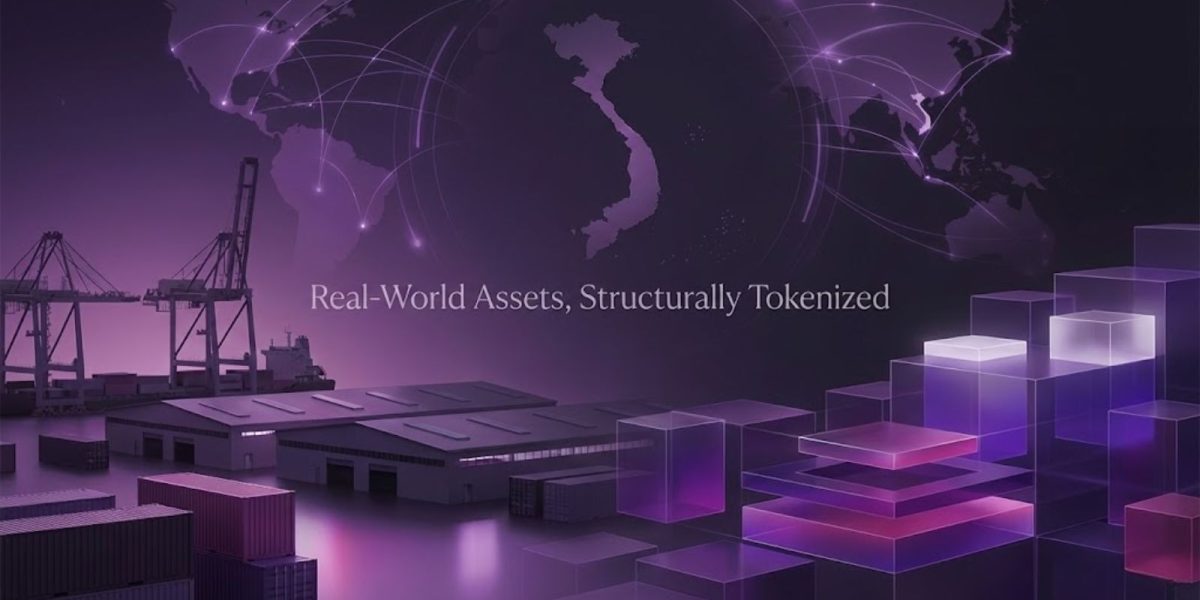
RWA as a market mechanism, not a technology trend
RWA does not emerge as a new technology wave, but as a mechanism that reorganizes how assets are owned, transferred, and governed within the real economy. While earlier blockchain cycles focused on protocols, products, or tokens, RWA centers on real value flows: goods, invoices, real estate, receivables, and financial instruments embedded in daily economic activity.
The core distinction is that RWA does not create value from technology itself, but restructures how existing value is digitized, verified, and distributed. As a result, RWA does not follow rapid adoption–decline cycles; it evolves at the pace of capital markets, trade, and risk governance.
In this context, RWA becomes the bridge between traditional economies and digital infrastructure, where technology serves as an enabling layer rather than the end goal.
Vietnam’s legal context: when asset digitization enters an institutional foundation phase
Since late 2025, Vietnam’s legal framework for digital and digitized assets has shifted from observation toward deliberate institutional foundation-building. Rather than rapid liberalization, Vietnam has adopted a layered approach, prioritizing systemic risk control and enforceability.
The Law on Electronic Transactions (2023) formally legitimizes electronic data, digital signatures, and electronic contracts—prerequisites for lawful asset digitization. Subsequently, the Law on Digital Technology Industry (2025) explicitly incorporates digital and cryptographic assets into the digital-economy governance framework, emphasizing rights, obligations, and legal enforceability.
At the policy level, Government Resolution No. 05/2025 enables controlled pilots for cryptographic-asset market models, while Decree No. 94/2025 on banking sandboxes provides operational space for payments, digital identity, and cash-flow structures under supervised conditions.
Together, these measures establish a clear legal sequence:
digital transaction legality → asset definition → controlled pilots → risk-based expansion.
For RWA, this represents not a regulatory loophole, but an enforceable pathway operating within Vietnam’s legal perimeter.
Global and regional references: RWA as long-term financial infrastructure
Globally, RWA is increasingly positioned as a new layer of capital-market infrastructure, not a technology experiment. In Europe, initiatives around tokenized securities and asset-backed instruments emphasize legal, accounting, and custody standards over transaction speed. In the Middle East, RWA aligns with trade finance and infrastructure-linked assets, supporting long-term capital formation.

Across these markets, a consistent pattern emerges: RWA scales only after governance and custody frameworks are in place. No ecosystem has enabled large-scale tokenization without investor protection, accounting clarity, and legal accountability.
These references reinforce that RWA is not a tactical play, but a strategic decision about how markets are structured for decades ahead.
RWA × custody × governance: an inseparable triangle
RWA cannot exist in isolation. Tokenization is meaningful only when ownership is protected, data is controlled, and accountability is clearly defined. This is where custody and governance become inseparable from RWA.
Custody ensures segregation, protection, and auditability, while governance defines responsibility, jurisdiction, and enforcement. Without either element, RWA remains a technical representation rather than a trusted financial instrument.
The integration of RWA, custody, and governance enables tokenized assets to be accepted by enterprises, financial institutions, and regulators.
Value across market participants
For enterprises, RWA enables capital optimization and asset transparency, particularly for inventory, receivables, and collateral. For high-net-worth individuals, it offers controlled access to asset classes previously reserved for institutions.
For financial institutions, RWA supports standardized asset data and reduced operational risk, while regulators gain enhanced real-time oversight capabilities. Each participant approaches RWA differently, yet converges on a shared infrastructure layer.
RWA enabling the next phase
When implemented correctly, RWA does more than digitize assets—it activates new economic models: more efficient supply-chain finance, transparent capital markets, and interoperable financial systems. RWA becomes a catalyst for the next phase of the digital economy, integrating data, capital, and governance into a unified structure that delivers long-term competitive advantage.
Forward outlook: RWA as a long-term structural pillar
In the long term, RWA is not a product category but a structural pillar. Deployed alongside custody and talent development, it can help Vietnam upgrade how its economy is financed, governed, and scaled.
RWA’s success will not be measured by token volume, but by how deeply it integrates into real economic activity—a slower yet more sustainable path aligned with disciplined digital transformation
Published by IDGX — Institutional insights on real-world asset tokenization, market infrastructure, and the long-term architecture of Vietnam’s digital economy.